Neck and shoulder pain from sitting for long periods or driving for extended hours is one of the most common issues people experience today. Whether you’re at a desk, in your car, or looking down at your phone, these positions can create tension that builds up slowly and becomes difficult to ignore.
If your neck feels stiff, your shoulders feel tight, or you notice discomfort between your shoulder blades, your body is responding to prolonged posture and limited movement. The good news is there are simple ways to relieve that tension and prevent it from getting worse.
Why Sitting and Driving Cause Neck and Shoulder Pain
When you sit for long periods, especially with poor posture, your muscles are forced to hold your body in a fixed position. Over time, this creates strain in the neck, shoulders, and upper back.
Driving can have a similar effect. Your arms stay extended, your shoulders slightly elevated, and your head often shifts forward. This combination leads to tightness in the trapezius muscles, chest, and upper spine.
Without regular movement, your muscles don’t get a chance to reset, which is why the tension continues to build.
Common Symptoms of Posture-Related Tension
- Tightness in the neck and upper shoulders
- Aching between the shoulder blades
- Stiffness when turning your head
- Tension headaches
- Chest tightness or shallow breathing
Simple Ways to Relieve Neck and Shoulder Pain from Sitting
1. Reset Your Posture
Bring your shoulders slightly back and down, and keep your head aligned over your spine instead of leaning forward. Small adjustments throughout the day make a big difference.
2. Take Movement Breaks
Stand up, stretch, or walk around every 30–60 minutes. Even short breaks help reduce muscle fatigue and improve circulation.
3. Stretch the Chest and Shoulders
Open your chest by gently pulling your shoulders back or placing your arms behind you. This counteracts the forward position caused by sitting and driving.
4. Focus on Breathing
Slow, deep breathing can help release tension in the chest and upper body. Try inhaling through your nose and exhaling slowly to relax your muscles.
5. Adjust Your Work or Driving Setup
Make sure your screen is at eye level, your chair supports your back, and your steering wheel allows your arms to stay relaxed rather than elevated.
When Tension Doesn’t Go Away
If your neck and shoulder pain continues to come back, it may be a sign that deeper muscle patterns have developed. Sitting and driving create repetitive stress that simple stretching may not fully release.
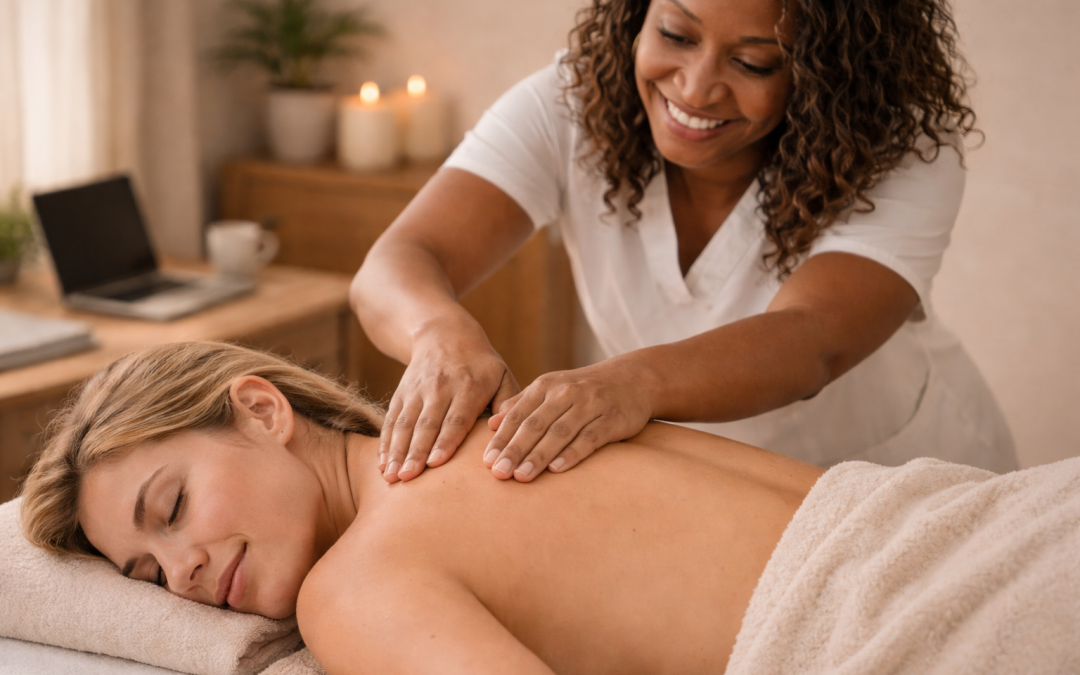
This is where hands-on work becomes important. Massage therapy can help reduce muscle tightness, improve circulation, and support your body in returning to a more balanced state.
Support Your Body with Consistent Care
Taking a few minutes to move, stretch, and reset your posture can make a noticeable difference. But if your body still feels tight or restricted, it may be time to go deeper.
At Chloe Massage Spa, each session is designed to help release built-up tension, improve mobility, and support long-term relief from posture-related discomfort.
Ready to feel better?
Book your massage session today and give your body the relief it needs.